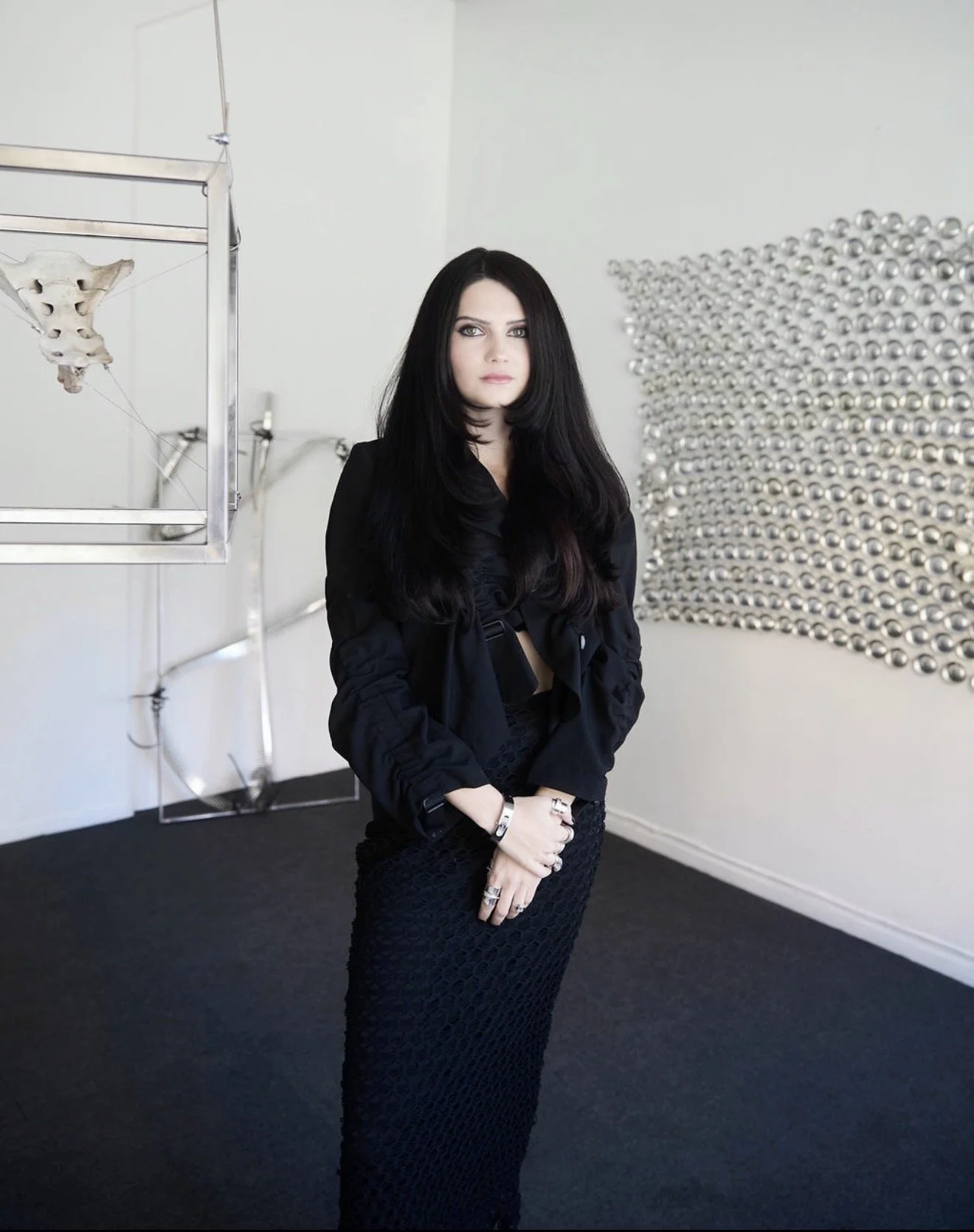
Nicole Elkins (b. 1996) is a New York born and based artist working under the name TERSA BRUTA. Her interdisciplinary practice uses raw and industrial materials to examine the body as structure, surface, and site of memory. Across sculpture and installation, material is treated not as representation but as a system that carries pressure, endurance, and transformation.
Material labor is central to Elkins’ practice. Repetitive actions such as cutting, piercing, linking, binding, and fastening function as both process and meaning. Aluminum is punched and hand-linked element by element, edges left imperfect and capable of catching skin. Wax is applied hot and allowed to drip, harden, and fracture. Bone and leather are handled directly, retaining the weight of their origin. These processes foreground time, touch, and duration, allowing the physical effort of making to remain visible within the work.
Elkins’ approach is informed by a background in fashion and construction. She studied International Trade and Marketing at the Fashion Institute of Technology and worked across ateliers and production environments for brands including Oscar de la Renta, Helmut Lang, and Ralph Lauren. While fluent in the language of fabric and structure, she became increasingly drawn to rawness and remnants of production. Discarded textiles and trims became foundational materials, later collided with metal, wax, bone, and leather in her studio practice.
Working under this name, Elkins resists polish and completion. Drawing from avant-garde fashion, horror cinema, and an interest in what is often deemed macabre or unsettling, her work preserves weight, wear, and imperfection as evidence of use and vulnerability. Materials associated with deterrence or harm are slowed through care and repetition, their violence transformed into connective surfaces.
Recent work marks a shift toward resilience and embodied confidence. Sculptures function as structural shells rather than armor, systems designed to carry pressure, absorb impact, and adapt through use. The body is positioned not as image but as a site where experience accumulates materially. Across the practice, endurance, exposure, and regeneration coexist, situating the work between engineered form and organic residue.
ABOUT